

Research Unit »Politics«
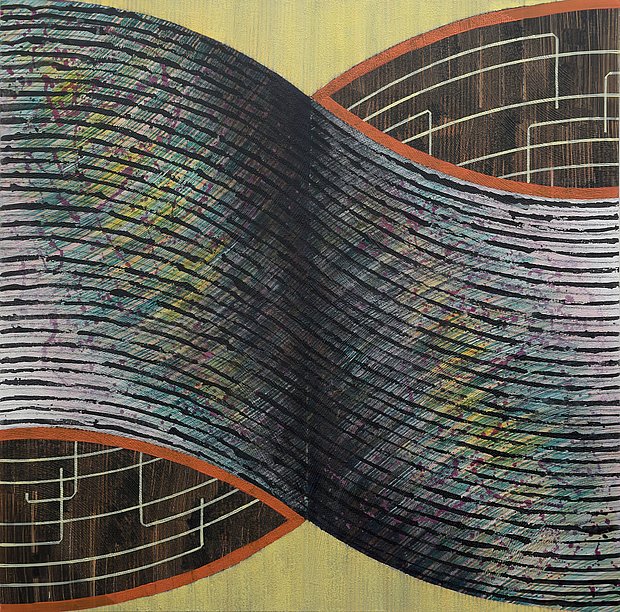
The Research Unit »Politics« explores the heterogeneous responses of Jews to the political challenges of their times. Unlike the prevailing assumption of the Enlightenment era, Jews were by no means confronted by a linear development going into the twentieth century, but rather with an oscillation between the granting and revocation of civil, meaning: political equality. Thus, this research unit focuses on questions of belonging and the limits and limitations of belonging. The research unit is structured according to the following three focal points.
The focal point »Utopias« explores the great attraction that various political visions of the future, especially those within the Labor Movement and the Left, began to exert on Jews from the nineteenth century onwards.
The focal point »Experiences of Violence« centers on the diverse forms of violence experienced by Jews in the twentieth century, from the eruptions that followed World War One through to Late Stalinism, as well as the eradication of all forms of experience during the Holocaust.
The focal point »Pluralism and Secularization« elucidates the historical and intellectual causes and consequences of regionally and nationally divergent ideas of pluralism. It also emphasizes the flipside, namely the tendency towards ethnic homogenization, which especially affected Jews.
Head of Research Unit
Prof. Dr. Jan Gerber
Research Unit Coordinator
Dr. des. Shaul Marmari
Research Projects
A New History of the Labor and Union Movement
The Last Citizen
An Intellectual Biography of Max Horkheimer
A New History of the Labor and Union Movement
Trade Union Activist, Journalist, and Trotskyist
The Life of Jakob Moneta and His Interpretation of Life (1914–2012)
Jaakov Blumas
The artworks on this website are created by the painter and object artist Jaakov Blumas. He was born in 1953 in Vilnius (Lithuania). He studied from 1981 to 1987 at the University of Fine Arts in Hamburg. Today he still lives in Hamburg, where he works as an artist. He is a member of the Free Academy of Arts Hamburg.
DIKUSA – Networking Digitized Cultural Data in Saxony
The project »Networking Digitized Cultural Data in Saxony – The Development of a Technical Infrastructure for Research on Mobility, Migration, and the Transformation of Places, People, and Artefacts (in Temporal and Spatial Perspective) – DIKUSA« is coordinated by KompetenzwerkD, the Department for Digital Competence at the Saxon Academy of Sciences and Humanities in Leipzig. Research on this project is being conducted by six humanities research institutes, each of which runs its own sub-project dedicated to the cultural and social history of Saxony.


