30 September 2026
Berlin / Jerusalem. Schocken’s Gardens
New exhibition at the Dubnow Institute
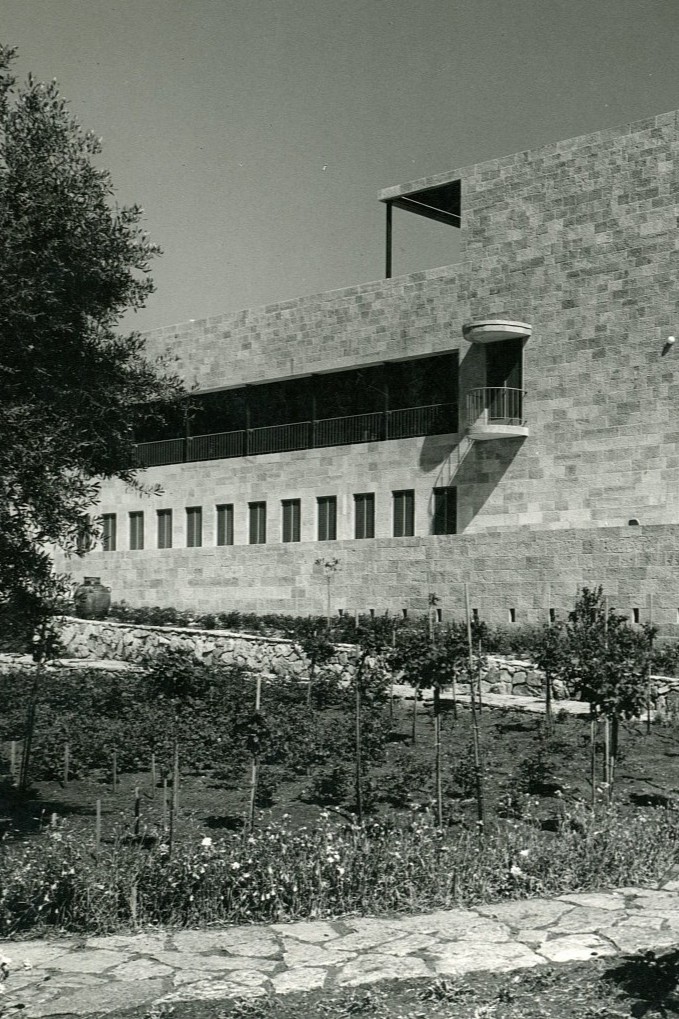
A new exhibition titled »Berlin/Jerusalem. Schocken’s Gardens« will open on 12 October 2026, at 5 p.m. at the Leibniz Institute for Jewish History and Culture – Simon Dubnow in Leipzig. It documents the creation of an extraordinary garden in Jerusalem by the Schocken family between 1936 and 1938. The exhibition addresses Jewish flight and emigration from Germany and presents the garden as a counter-space to an era defined by destruction.
Beginning with a store in Zwickau, Salman Schocken (1877–1959) and his brother Simon (1874–1929) built one of the most modern department store chains in the Weimar Republic. His success enabled Salman Schocken to patronize various artistic, cultural, and social projects. Following Hitler’s appointment as Reich Chancellor in 1933, Schocken and his wife Lili (1889–1958) decided to leave Germany together with their children; his department stores were sold way below market value in late 1938.
The 1933 Ha’avara Agreement enabled German Jews to transfer at least some of their savings by emigrating to Palestine: Construction materials and other goods could be exported in exchange for financial transfers to an escrow account. Whoever paid into such an account would receive the equivalent value in local currency upon arrival in the mandatory territory; the emigrants needed this money to survive. The house, garden, and library designed for Schocken in Jerusalem by Erich Mendelsohn (1887–1953) were products of these circumstances.
The archive held in the Schocken Library documents the family’s situation in light of disenfranchisement in Germany and a forced new beginning in Palestine. It underlines the special significance that Lili and Salman Schocken invested in their garden in Jerusalem during these years.
The garden contained both familiar plants and new, imported plants that were forced to adapt. As such, it can be viewed as an emblem of migration. At the same time, it had a long intellectual history rooted in ideas about the creation of a proper order. Schocken’s garden thus became a malleable counterplace.
Given the events then unfolding in Europe and Palestine, the design and construction project in Jerusalem appears surreal. Yet the garden temporarily became a living counterweight to a time of uncertainty, overload, and destruction.
Visitors will be able to view the exhibition as part of public guided tours.
Overview
Wednesday, 21 October 2026, 1 p.m.;
Thursday, 5 November 2026, 2 p.m.
Wednesday, 11 November 2026, 1 p.m.;
Friday, 20 November 2026, 4 p.m.;
Wednesday, 2 December 2026, 1 p.m.;
Friday, 18 December 2026, 4 p.m.
Email Newsletter
Interested parties can register to receive our email newsletter. Following registration, you will receive occasional news regarding the institute’s publications, events, and research projects.