25 November 2026
Documentary film »Memory is Our Homeland«
as part of the annual conference »The Age of Humanitarianism«
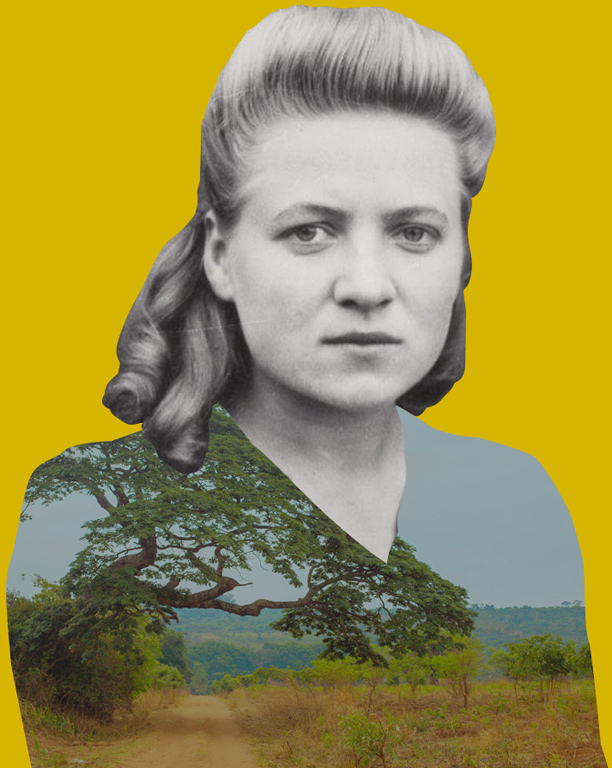
As part of the annual conference »The Age of Humanitarianism,« the Dubnow Institute will screen »Memory is Our Homeland« (CA, PL 2018, 90 min.) on Tuesday, 8 December 2026, at 7 p.m. at the Schaubühne Lindenfels. Following the screening of this English-language documentary, there will be a discussion between director Jonathan Kołodziej Durand and Dr. Eliana Hadjisavvas from Birkbeck College, London. Registration is required by 2 December 2026.
»Memory is Our Homeland« (2019, 90 min.) is a documentary film charting the lost story of Polish refugees in Africa from 1942 to 1952 - a journey that brought a group of children through Siberia, Iran, India, and East Africa, to new lives in Montreal, Sheffield, and across the global Polish diaspora.
It follows the story of Kazia Kolodziej (née Gerech), the grandmother of the filmmaker Jonathan Kołodziej Durand, and other Polish refugees, as they meditate on the meaning of memory, identity, and homeland. Grappling with memories of a traumatic exile in the Soviet Union, followed by an adolescence full of discovery in a Polish refugee camp near the foot of Mount Kilimanjaro, we see how these women’s lives have been shaped by early years fraught with insecurity and change.
The 20th century witnessed profound waves of Jewish migration and displacement on a global scale. This year’s annual conference of the Dubnow Institute aims to broaden the focus on empires and migration to a more comprehensive global perspective. Funded by the Alfred Landecker Foundation, the conference is being held in cooperation with Birkbeck College (University of London) and the Institute for Migration Research and Intercultural Studies (University of Osnabrück) and is organized by Sebastian Willert, Eliana Hadjisavvas, and Sebastian Musch. It focuses on the connections between humanitarian networks, ranging from grassroots movements to professional organizations. Its comparative approach analyses how different regions responded to migration and the support systems in place.
Email Newsletter
Interested parties can register to receive our email newsletter. Following registration, you will receive occasional news regarding the institute’s publications, events, and research projects.